
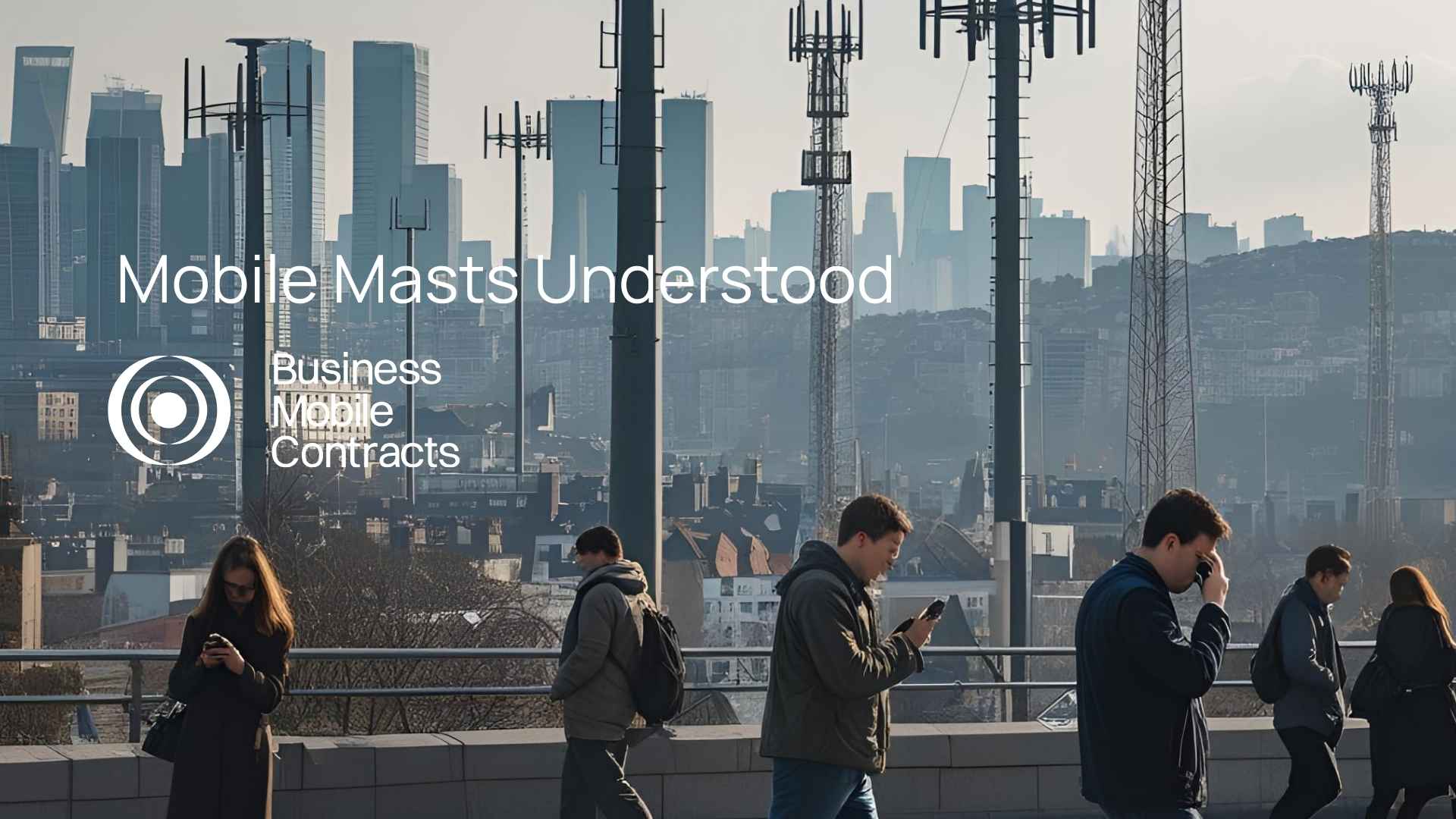
Mobile Masts Understood

Prefer To Watch & Listen To Mobile Masts Understood?
Mobile Phone Masts Understood
Mobile devices are used with such ease and frequency that the extensive network infrastructure supporting their connectivity often goes unnoticed. A critical component of this infrastructure is the mobile phone mast. Regardless of whether you are conducting a business call, streaming video during travel, or processing a payment in a shop, a nearby mast is facilitating these activities seamlessly. Although these structures may appear to be mere metal towers, they encompass a complex and sophisticated system beyond their outward simplicity.
The Beating Heart of Mobile Connectivity
A mobile mast functions as a central node that facilitates communication between a user’s device and the broader telecommunications network. The antennas, typically installed at elevated positions, are engineered to provide extensive coverage by transmitting and receiving signals omnidirectionally, ensuring connectivity for all users within the surrounding area.
The radio units attached to these antennas act as essential translators within the system. They convert electrical signals from the network into radio frequency waves comprehensible to mobile devices, and reciprocally translate signals from devices back into electrical signals. Proper placement and calibration of these radio units are crucial for improving the strength and stability of the wireless connection.
At the base of the mast, protective cabinets house essential equipment, safeguarding it from environmental factors. These enclosures contain power supply systems, switching apparatus, and backup batteries designed to maintain uninterrupted service during power outages. The mast is linked to the wider network via high-capacity connections known as backhaul. Typically, this backhaul is established through subterranean fiber-optic cables; however, in geographically isolated areas, focused microwave dishes may be employed to transmit data over extended distances.
Why More Masts Are a Necessity
The proliferation of communication masts can be attributed primarily to the increasing demand for wireless connectivity. Each mobile phone, tablet, or connected device within a given area competes for a portion of the mast’s available capacity. Since a single mast can only support a limited number of users at optimal speeds, densely populated or high-traffic areas require a greater number of masts positioned in closer proximity to effectively manage the volume of data transmission.
Furthermore, the demand is influenced not only by the number of connected users but also by the nature of their activities. Data-intensive applications such as video streaming, video conferencing, uploading large files, and utilizing cloud-based business services consume significantly more bandwidth compared to basic text messaging. Consequently, modern telecommunications networks must deploy a sufficient number of masts to accommodate these substantial data loads without compromising performance.
The strategic placement of masts is also a critical factor in network efficiency. Optimal functionality is achieved when masts maintain an unobstructed “line of sight” to the devices they serve. Physical obstructions such as hills, tall buildings, and dense foliage can attenuate or block signals, necessitating careful site selection. This process often involves complex considerations, including obtaining regulatory permissions, conducting engineering surveys, and negotiating agreements with landowners.
Masts You Might Not Even Notice
While certain masts are prominently visible within the landscape, a significant number are intentionally engineered to integrate seamlessly with their surroundings. These structures may be installed on rooftops and disguised as chimneys, fashioned to resemble lampposts in busy streets, or camouflaged to mimic trees in rural environments. Such design strategies address local planning regulations and minimize visual intrusion, yet they do not alter the fundamental function of these masts, which is to maintain connectivity.
In urban centres, there is an increasing deployment of small, unobtrusive masts affixed to buildings or street furniture. Although these installations cover limited geographic areas, they effectively manage high data traffic in concentrated locations such as commercial districts, transportation hubs, and sports venues.
Bringing the Signal to Remote Areas
One of the main challenges faced by network providers is delivering coverage to rural communities and isolated locations.
The financial and logistical difficulties involved in extending traditional grid and fibre infrastructure to these places are often significant. Innovative mast designs have emerged as a practical solution to these challenges.
Certain sites are solely powered by renewable energy sources, like solar panels or wind turbines, often with added battery storage systems to ensure continuous operation at night or during periods of low solar and wind activity. These environmentally friendly masts remove the need for diesel generators, reducing ecological impact while providing reliable connectivity for remote areas.
Additionally, temporary or mobile masts are sometimes used for special events, emergencies, or to provide interim coverage while permanent systems are being set up. These “pop-up” sites are designed for quick deployment and mobility, utilizing wireless backhaul connections to seamlessly link with the main network infrastructure.
How Far Can a Mast Really Reach?
The effective range of a mast is influenced by multiple variables, including the height of the antennas, the signal power, the frequency employed, and the intervening terrain. In rural areas with minimal obstructions, a mast can provide coverage to users located several kilometres away. Conversely, in densely populated urban environments characterized by numerous physical barriers, the coverage range is significantly reduced, necessitating a higher density of masts within cities.
Lower frequency signals tend to propagate over greater distances and penetrate buildings more efficiently, which accounts for their common use in rural coverage.
In contrast, higher-frequency signals, such as those used in certain 5G networks, support substantially higher data transmission rates but have a more limited range, making them more suitable for urban and industrial settings.
Masts are Getting Smarter
Contemporary mobile masts are no longer static, unalterable devices; rather, they are progressively integrated with intelligent systems that enable remote management. Engineers can modify antenna orientations, adjust transmission power, and reassign network capacity in response to demand, all without the necessity of physical presence at the site.
"certain masts are now equipped with sensors that continuously monitor weather conditions and operational performance in real time."
Additionally, certain masts are now equipped with sensors that continuously monitor weather conditions and operational performance in real time. The data collected through these sensors facilitates the optimization of network coverage, rapid fault detection and response, as well as more effective planning of infrastructure upgrades. As the deployment of 5G technology advances, these functionalities are expected to expand further, permitting networks to adapt instantaneously to evolving requirements.
Why Businesses Should Pay Attention
For companies, the dependability and extent of mobile mast coverage is not merely a technical concern; it serves as the foundation of everyday operations. Essential processes such as mobile point-of-sale systems in retail, tools for remote work, video calls, logistics management, and cloud-based services all rely on robust and consistent connectivity.
Enhanced coverage from masts minimizes the risk of dropped calls, unresponsive screens, or sluggish file uploads. This ensures that field workers can maintain communication, delivery personnel receive real-time updates, and customers benefit from uninterrupted service without annoying delays.
The Bigger Picture
Mobile phone towers serve a purpose beyond just being tall structures on the skyline. They are crucial for a connected economy, facilitating communication, commerce, and community interaction. They are advancing to become more eco-friendly, intelligent, and efficient, prepared to handle the needs of both the present and the future.
Whether they rise prominently in rural areas, blend into urban environments, or operate quietly on renewable energy in isolated regions, towers consistently function behind the scenes. The next time you make a call, send a text, or stream a video seamlessly, you'll appreciate what allows it to happen.
Placing your confidence in regions with robust mast coverage goes beyond a technical choice; it is a strategic business choice that can influence your growth pace, competitive edge, and the level of service you provide to your customers.